google-site-verification=PfKbAz_x1wAQ2glG42-CRb1sPim89lz3nvaquiOlRkM

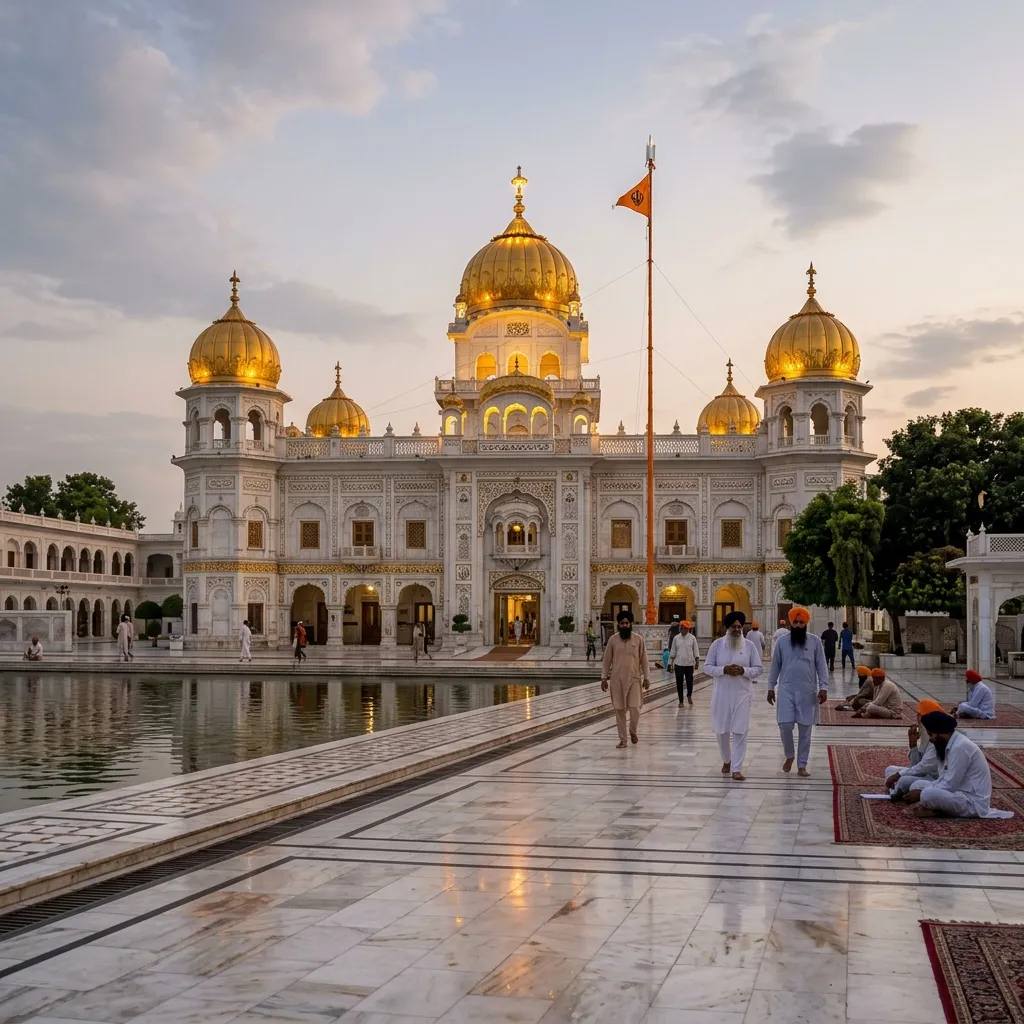
Gurdwara Panja Sahib, Hassan Abdal, Pakistan

Hassan Abdal, Attock District, Punjab, Pakistan
Gurdwara Panja Sahib, Hassan Abdal, Pakistan
Hassan Abdal, Attock District, Punjab, Pakistan
Hassan Abdal Sikh Heritage & Pilgrimage Region, Punjab, Pakistan Region

About Gurdwara Panja Sahib, Hassan Abdal, Pakistan

Gurdwara Panja Sahib, Hassan Abdal

Gurdwara Panja Sahib is one of the most important and historically significant Sikh pilgrimage sites in Pakistan. Located in Hassan Abdal, Attock District, Punjab, the shrine is deeply connected with the Sikh tradition surrounding Sri Guru Nanak Dev Ji, the First Sikh Guru.

According to Sikh tradition preserved by the SGPC, Guru Nanak Dev Ji visited Hassan Abdal in 1521, accompanied by Bhai Mardana. The tradition tells of an encounter with Wali Qandhari, a holy man whose dera was situated on the hill above the settlement. During the episode, a large rock is said to have been rolled down toward Guru Nanak. Sikh tradition holds that Guru Nanak stopped the rock with his hand, leaving a hand impression on the stone. This sacred rock became known as Panja Sahib, from the Punjabi word Panja, meaning the palm or hand.

The historic shrine also contains a sarovar, and the natural spring associated with the site forms an important part of its religious landscape. The Punjab Government describes the hand impression as being preserved inside the Gurdwara. 

Panja Sahib is significant not only because of its association with Guru Nanak Dev Ji but also because of its later role in the Gurdwara Reform Movement and the historic Saka Panja Sahib of 1922. On 31 October 1922, Sikh devotees at Hassan Abdal attempted to provide food to Sikh prisoners being transported by train. Two Sikhs, Bhai Karam Singh and Bhai Partap Singh, were martyred and several others were injured after the train was stopped. The SGPC records this event as an important episode in Sikh history. 

Today, Gurdwara Panja Sahib remains a major destination for Sikh pilgrims visiting Pakistan, particularly during major religious occasions such as Vaisakhi. ETPB continues to list Panja Sahib among Pakistan's major Gurdwaras and provides pilgrim-related arrangements at major shrines.

Historical Background

Heritage & History / Historical Background.


Guru Nanak Dev Ji's Visit to Hassan Abdal

The most important historical and religious association of Panja Sahib is with Sri Guru Nanak Dev Ji's visit to Hassan Abdal in 1521.

The SGPC's historical account states that Guru Nanak Dev Ji arrived at Hassan Abdal with Bhai Mardana during the summer. At the time, Wali Qandhari maintained a dera near a natural spring on the hill.

The Department of Archaeology and Museums of Pakistan also records 1521 CE as the period associated with Guru Nanak's visit to Hassan Abdal and identifies the shrine as a historic monument.


The Sacred Panja Rock

The central feature of the shrine is the historic rock traditionally associated with Guru Nanak Dev Ji's hand impression.

According to Sikh tradition, when a large rock was sent rolling down the hill toward Guru Nanak, he stopped it with his hand. The rock is believed to have retained the impression of his palm.

The name Panja Sahib comes from Panja, referring to the palm or hand.

The Punjab Government's official religious-monuments page describes the hand impression as preserved inside the Gurdwara, while Pakistan's Department of Archaeology records the site as a historic Gurdwara associated with this tradition.


Wali Qandhari and the Hassan Abdal Tradition

The story of Panja Sahib is closely connected with Wali Qandhari, whose dera was traditionally located on the hill above Hassan Abdal.

The SGPC account describes an encounter between Wali Qandhari and Guru Nanak Dev Ji and says that the experience transformed Wali Qandhari's attitude toward the Guru.

For visitors, the hill associated with Wali Qandhari provides an important part of the historical landscape surrounding Panja Sahib.

This combination of Guru Nanak's visit, the sacred Panja rock, the spring and Wali Qandhari's hill makes Hassan Abdal particularly distinctive within the Sikh pilgrimage heritage of Pakistan.


Construction & Sikh Heritage

The present Gurdwara complex developed during the period of Sikh rule in Punjab.

The Department of Archaeology and Museums records the first Gurdwara at the site as having been built by Hari Singh Nalwa, a prominent general under Maharaja Ranjit Singh, and identifies the monument's relative chronology within the 1799–1849 CE period.

The SGPC similarly records that Sardar Hari Singh Nalwa had a large Gurdwara building and sarovar constructed at Panja Sahib.

The site therefore represents multiple layers of Sikh heritage:

Guru Nanak Dev Ji's 16th-century visit → Sikh tradition of the Panja rock → Sikh-era construction → Gurdwara Reform Movement → Saka Panja Sahib → modern Sikh pilgrimage.


Gurdwara Reform Movement

Panja Sahib also played an important role in the Sikh Gurdwara Reform Movement of the early 20th century.

According to the SGPC's historical account, the Gurdwara had been under hereditary Mahant management. A Sikh jatha led by Bhai Kartar Singh Jhabbar reached Panja Sahib in November 1920, after which the SGPC gained control of the shrine.

The event forms part of the broader movement through which Sikh communities sought institutional management of historic Gurdwaras.


Saka Panja Sahib — The Historic Martyrdom of 1922

A Defining Chapter in Sikh History

One of the most important historical events connected with Panja Sahib is the Saka Panja Sahib of 1922.

During the Guru-Ka-Bagh agitation, Sikh prisoners were being transported by train toward Attock. Sikh Sangat at Panja Sahib learned that the prisoners had not been properly fed.

According to the SGPC's historical account, Sikh leaders requested the railway authorities to stop the train so that food could be provided to the prisoners. When the train was not scheduled to stop, Sikh devotees gathered at the railway line after Ardas.

On 31 October 1922, the train was stopped after Sikh devotees placed themselves on the railway tracks. Bhai Karam Singh and Bhai Partap Singh sacrificed their lives, while six other Sikhs sustained serious injuries. The train remained stopped long enough for food to be provided to the prisoners.

The episode is remembered as Saka Panja Sahib and has become an enduring symbol within Sikh historical memory of Sewa, sacrifice, compassion and devotion.

Religious Significance

 Religious Significance

Why Is Gurdwara Panja Sahib Important to Sikhs?

Gurdwara Panja Sahib holds a special place in Sikh religious heritage because it brings together Guru Nanak Dev Ji's teachings, Sikh tradition, pilgrimage, service and sacrifice.

1. Association with Guru Nanak Dev Ji

The shrine is associated with Guru Nanak's visit to Hassan Abdal in 1521. 

2. Sacred Panja

The hand impression preserved on the historic rock is one of the most distinctive sacred features of the site.

3. Sarovar and Sacred Spring

The water and sarovar form an important part of the spiritual environment of the Gurdwara.

4. Sewa

Panja Sahib is deeply associated with the Sikh principle of Sewa, or selfless service.

5. Sacrifice

The Saka Panja Sahib of 1922 gives the site an additional historical significance connected with sacrifice and service to fellow Sikhs.

6. Sikh Pilgrimage

Panja Sahib is one of Pakistan's principal Sikh pilgrimage destinations and is included in official pilgrim programmed for major Sikh religious occasions.

Visiting Information

Visitor Information

Visiting Gurdwara Panja Sahib.


Gurdwara: Gurdwara Panja Sahib
City: Hassan Abdal
District: Attock
Province: Punjab
Country: Pakistan

The Gurdwara is approximately 48 km from Rawalpindi, making it an important stop for pilgrims travelling from Islamabad and Rawalpindi toward northern Punjab.


What Can Visitors See?

A pilgrimage visit can include:

  • Darshan of the historic Panja Sahib rock
  • The sacred sarovar
  • Main Gurdwara complex
  • Historic Sikh architecture
  • Areas associated with Guru Nanak Dev Ji's visit
  • Heritage associated with Wali Qandhari
  • Reflection on the history of Saka Panja Sahib
  • Sikh religious ceremonies when scheduled
  • Langar and community facilities, subject to current arrangements

Pilgrim Accommodation & Facilities

Panja Sahib is an officially recognized major Gurdwara under the ETPB system.

ETPB states that its Shrines Branch is responsible for arrangements including security, accommodation/boarding, religious ceremonies and health facilities for yatrees at major shrines. Panja Sahib is specifically listed among those major Gurdwaras.

ETPB's functional Gurdwara listing currently records Gurdwara Panja Sahib, Hassanabdal, with an area of approximately 25 Kanal.

For international travellers, exact accommodation, opening arrangements, security procedures and access should be confirmed before the journey because pilgrimage arrangements can change according to the season and religious calendar.


Besaki / Vaisakhi at Panja Sahib

Vaisakhi / Besaki is particularly important at Gurdwara Panja Sahib.

The shrine hosts major Sikh pilgrimage activity during Vaisakhi, and ETPB's 2026 arrangements identified Gurdwara Panja Sahib, Hassan Abdal as the venue for the main ceremony on 14 April 2026, with Sikh pilgrims arriving from India and other locations.

For Sikh travellers planning a Pakistan pilgrimage, Vaisakhi can therefore be an important period for experiencing the wider religious atmosphere of Panja Sahib.


Sikh Pilgrimage Route

Gurdwara Panja Sahib can be included in a wider Sikh Heritage Tour of Pakistan.

A typical heritage route may include:

Nankana Sahib

Gurdwara Janam Asthan
Gurdwara Bal Leela Sahib
Gurdwara Patti Sahib
Gurdwara Kiara Sahib
Gurdwara Tambu Sahib

Farooqabad

Gurdwara Sacha Sauda

Hassan Abdal

Gurdwara Panja Sahib

Eminabad

Gurdwara Rohri Sahib

Lahore

Gurdwara Dera Sahib and other Sikh heritage sites

Kartarpur

Gurdwara Darbar Sahib Kartarpur

This allows international Sikh travellers to experience the broader historical landscape associated with Guru Nanak Dev Ji and Sikh heritage in Pakistan.


International Sikh Pilgrims

For Sikh yatrees travelling from:

Canada • USA • UK • Australia • Malaysia • Singapore • Thailand • Netherlands • India • Worldwide

Gurdwara Panja Sahib can be an important part of a professionally planned Pakistan Sikh Pilgrimage Tour.

Visitors should verify current requirements relating to:

  • Pakistan visa
  • Pilgrimage permissions
  • Entry requirements
  • Security procedures
  • Accommodation
  • Gurdwara access
  • Religious-event schedules

ETPB maintains current pilgrim advisories and visit programmes for organized yatras.


Visitor Etiquette

Visitors should respect the sanctity of the Gurdwara at all times.

  • Cover your head.
  • Remove footwear where required.
  • Dress respectfully.
  • Maintain cleanliness.
  • Respect Gurbani and religious ceremonies.
  • Follow local Gurdwara management instructions.
  • Follow security procedures.
  • Avoid restricted photography or filming.
  • Maintain respectful behaviour around the sacred Panja and sarovar.
  • Participate in Sewa where appropriate and permitted.

  • Frequently Asked Questions

What is Gurdwara Panja Sahib?

Gurdwara Panja Sahib is a historic Sikh shrine in Hassan Abdal, Punjab, Pakistan, associated with Guru Nanak Dev Ji and the sacred hand impression traditionally preserved on a rock at the site.

Where is Gurdwara Panja Sahib located?

Gurdwara Panja Sahib is located in Hassan Abdal, Attock District, Punjab, Pakistan, approximately 48 km from Rawalpindi.

Why is Panja Sahib famous?

Panja Sahib is famous for its association with Guru Nanak Dev Ji, the sacred Panja rock and the historic Saka Panja Sahib of 1922.

When did Guru Nanak Dev Ji visit Panja Sahib?

According to Sikh historical tradition and official heritage records, Guru Nanak Dev Ji visited Hassan Abdal in 1521 CE.

What is Saka Panja Sahib?

Saka Panja Sahib refers to the 1922 incident in which Sikh devotees stopped a train carrying Sikh prisoners so that food could be provided to them. Bhai Karam Singh and Bhai Partap Singh were martyred during the event.

Who built Gurdwara Panja Sahib?

The Department of Archaeology and Museums of Pakistan records that the first Gurdwara at the site was built by Hari Singh Nalwa during the Sikh period.

Can international Sikh pilgrims visit Panja Sahib?

Yes, Gurdwara Panja Sahib is an active major Sikh pilgrimage site in Pakistan. International travellers must follow the current visa, pilgrimage, security and entry requirements applicable to their nationality and travel arrangements.

Quick Booking

Plan Your Visit

Fill in the details below to book your spiritual journey to Gurdwara Panja Sahib, Hassan Abdal, Pakistan.

Or call us for instant support:
Location Details
Address
Hassan Abdal, Attock District, Punjab, Pakistan
Region
Hassan Abdal Sikh Heritage & Pilgrimage Region, Punjab, Pakistan
Country
Pakistan
Spiritual Journeys

Related Yatra Packages

Complete Sikh Heritage & Pilgrimage Tour of Pakistan – 10 Days / 9 Nights
From $949$799
(Rs. 223,720)
10 Days / 9 Nights Lahore • Nankana Sahib • Sacha Sauda • Eminabad • Kallar Kahar • Katas Raj • Panja Sahib • Islamabad • Rohtas Fort • Choa Sahib • Kartarpur
Complete Sikh Heritage & Pilgrimage Tour of Pakistan – 10 Days / 9 Nights
Best of Pakistan Sikh Pilgrimage Tour – 5 Days | Nankana Sahib, Kartarpur & Panja Sahib Yatra
From $599$499
(Rs. 139,720)
5 Days / 4 Nights 5 Days Sikh Yatra Pakistan | Nankana Sahib, Kartarpur, Panja Sahib & Lahore
Best of Pakistan Sikh Pilgrimage Tour – 5 Days | Nankana Sahib, Kartarpur & Panja Sahib Yatra
All Pakistan Gurdwaras
Talk to Yatra Expert
Book Yatra Chat Expert